

• CL2P
  • Présentation
  • Opinion
  • Contact
CL2P
  • Accueil
  • Cameroun
  • Hommes Politiques
    CAMEROUN : LA FORCE DES ARCHIVES / CAMEROON : THE POWER OF THE ARCHIVES

    CAMEROUN : LA FORCE DES ARCHIVES / CAMEROON : THE POWER OF THE ARCHIVES

    À Yaoundé, tout s’effondre / Things Fall Apart in Yaoundé

    À Yaoundé, tout s’effondre / Things Fall Apart in Yaoundé

    CAMEROUN : STOP AUX CRIMES POLITIQUES D’ÉTAT  / CAMEROON: STOP STATE-SPONSORED POLITICAL CRIMES

    CAMEROUN : STOP AUX CRIMES POLITIQUES D’ÉTAT / CAMEROON: STOP STATE-SPONSORED POLITICAL CRIMES

    Cameroun: l’Histoire est de notre côté /Cameroon: History is on our side

    Cameroun: l’Histoire est de notre côté /Cameroon: History is on our side

    Cameroun, NOUS sommes prêts pour la démocratie / Cameroon, WE are ready for democracy

    Cameroun, NOUS sommes prêts pour la démocratie / Cameroon, WE are ready for democracy

    Le vieux Nègre* et ses fantasmes coloniaux du pouvoir

    Le vieux Nègre* et ses fantasmes coloniaux du pouvoir

    • Paul Eric KINGUE
    • Enoh Meyomesse
    • Marafa Hamidou
    • Pierre Désiré ENGO
    • Urbain Olanguena Awono
  • Dossiers Judiciaires
    CAMEROUN : LA FORCE DES ARCHIVES / CAMEROON : THE POWER OF THE ARCHIVES

    CAMEROUN : LA FORCE DES ARCHIVES / CAMEROON : THE POWER OF THE ARCHIVES

    Justice pour Martinez Zogo / Justice for Martinez Zogo

    Justice pour Martinez Zogo / Justice for Martinez Zogo

    Liberté Pour Assange / Freedom for Assange

    Liberté Pour Assange / Freedom for Assange

    Libérer Marafa / Freedom for Marafa

    Libérer Marafa / Freedom for Marafa

    Cameroun, Plus Jamais Ça! / Cameroon, Never Again!

    Cameroun, Plus Jamais Ça! / Cameroon, Never Again!

    CAMEROUN, ALERTE: SÉVICES CORPORELS ET MENACES DE MORT EN PRISON CONTRE M. ACHILLE ZOGO ANDELA, ONCLE DU JOURNALISTE ASSASSINÉ MARTINEZ ZOGO

    • Affaires judiciaires
    • Affaire Ambassa
    • Affaire Enoh
    • Affaire Eyoum
    • Affaire Kingue
    • Affaire Marafa
    • Affaire Mebara
    • Affaire Olanguena
  • Afrique
  • Europe
  • Monde
No Result
View All Result
  • Accueil
  • Cameroun
  • Hommes Politiques
    CAMEROUN : LA FORCE DES ARCHIVES / CAMEROON : THE POWER OF THE ARCHIVES

    CAMEROUN : LA FORCE DES ARCHIVES / CAMEROON : THE POWER OF THE ARCHIVES

    À Yaoundé, tout s’effondre / Things Fall Apart in Yaoundé

    À Yaoundé, tout s’effondre / Things Fall Apart in Yaoundé

    CAMEROUN : STOP AUX CRIMES POLITIQUES D’ÉTAT  / CAMEROON: STOP STATE-SPONSORED POLITICAL CRIMES

    CAMEROUN : STOP AUX CRIMES POLITIQUES D’ÉTAT / CAMEROON: STOP STATE-SPONSORED POLITICAL CRIMES

    Cameroun: l’Histoire est de notre côté /Cameroon: History is on our side

    Cameroun: l’Histoire est de notre côté /Cameroon: History is on our side

    Cameroun, NOUS sommes prêts pour la démocratie / Cameroon, WE are ready for democracy

    Cameroun, NOUS sommes prêts pour la démocratie / Cameroon, WE are ready for democracy

    Le vieux Nègre* et ses fantasmes coloniaux du pouvoir

    Le vieux Nègre* et ses fantasmes coloniaux du pouvoir

    • Paul Eric KINGUE
    • Enoh Meyomesse
    • Marafa Hamidou
    • Pierre Désiré ENGO
    • Urbain Olanguena Awono
  • Dossiers Judiciaires
    CAMEROUN : LA FORCE DES ARCHIVES / CAMEROON : THE POWER OF THE ARCHIVES

    CAMEROUN : LA FORCE DES ARCHIVES / CAMEROON : THE POWER OF THE ARCHIVES

    Justice pour Martinez Zogo / Justice for Martinez Zogo

    Justice pour Martinez Zogo / Justice for Martinez Zogo

    Liberté Pour Assange / Freedom for Assange

    Liberté Pour Assange / Freedom for Assange

    Libérer Marafa / Freedom for Marafa

    Libérer Marafa / Freedom for Marafa

    Cameroun, Plus Jamais Ça! / Cameroon, Never Again!

    Cameroun, Plus Jamais Ça! / Cameroon, Never Again!

    CAMEROUN, ALERTE: SÉVICES CORPORELS ET MENACES DE MORT EN PRISON CONTRE M. ACHILLE ZOGO ANDELA, ONCLE DU JOURNALISTE ASSASSINÉ MARTINEZ ZOGO

    • Affaires judiciaires
    • Affaire Ambassa
    • Affaire Enoh
    • Affaire Eyoum
    • Affaire Kingue
    • Affaire Marafa
    • Affaire Mebara
    • Affaire Olanguena
  • Afrique
  • Europe
  • Monde
No Result
View All Result
CL2P
No Result
View All Result
Home Actualités

Cameroon has been in crisis for six months. Here’s what you need to know

tedlapidus by tedlapidus
5 juin 2017
in Actualités, Afrique, Cameroun, CL2P, Divers, Politique, Prisonniers politiques, Societe, USA
0
Cameroon has been in crisis for six months. Here’s what you need to know
0
SHARES
0
VIEWS
Share on FacebookShare on Twitter

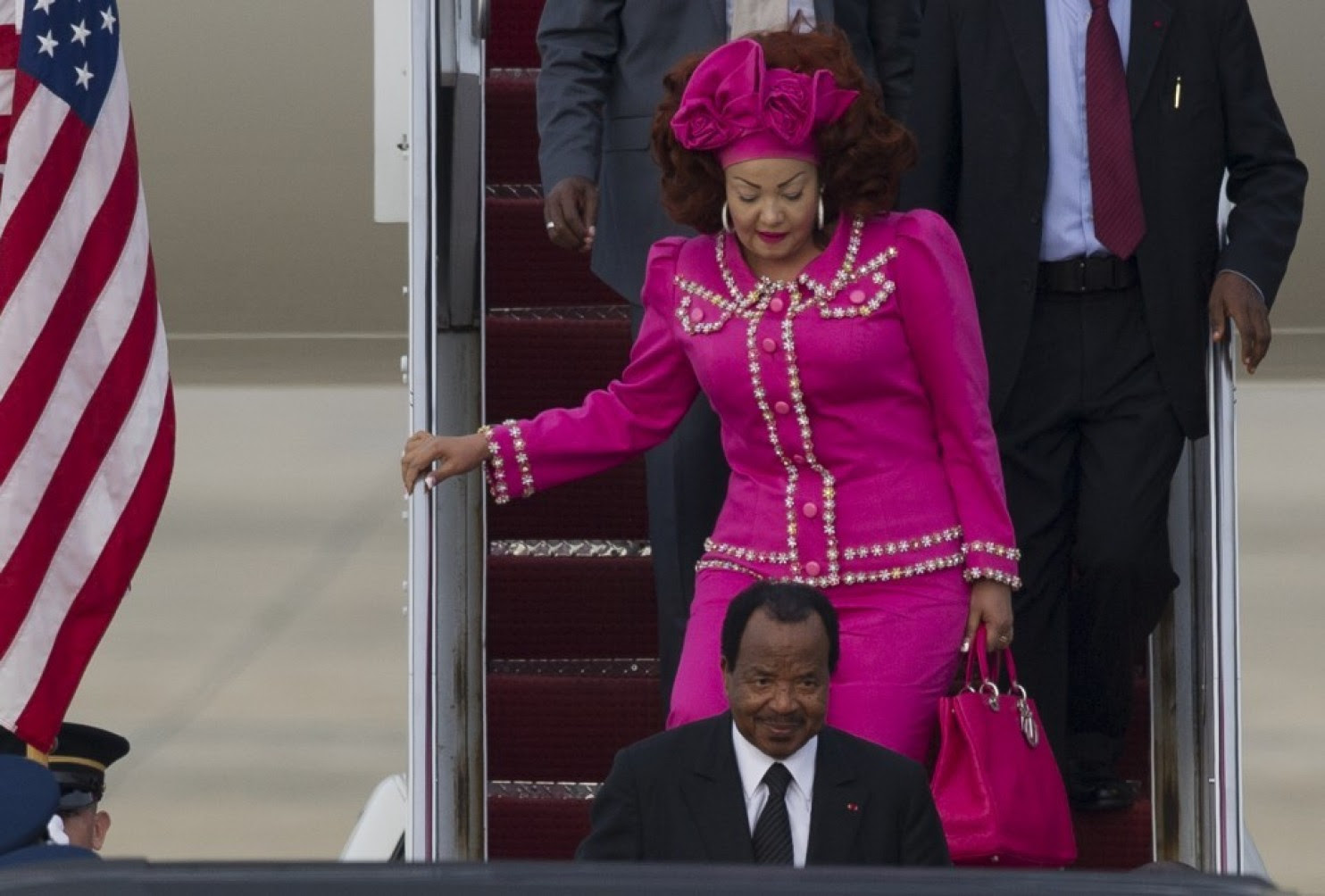
The English-speaking regions of Cameroon have been gripped by crisis for six months. Thousands of lawyers, teachers and students and several civil society groups have taken to the streets and launched strikes in opposition to discrimination against Anglophones by the central government and by Cameroon’s long-serving president, Paul Biya.

The government’s response has been harsh. At one protest more than 100 people were violently arrested. In December, four protesters were killed by live ammunition. The crisis escalated in January when activists threatened a month-long strike. The government banned two major organizations, arrested two of the movement’s leaders on terrorism charges, and imposed an Internet blackout across Anglophone Cameroon. Internet services have not been entirely restored, which has impacted local business and provision of health care. While Biya has offered symbolic concessions, they appear merely palliative and another protest wave seems imminent.

[A Navy SEAL was killed in Somalia. Here’s what you need to know.]

Here is what you need to know about the protests, and what they might mean for Cameroon and U.S. interests.

1. Anglophones used to have their own state.

Before independence in 1960, Cameroon was split between a larger French and smaller British mandate. During decolonization, a portion of British Cameroon elected to enter into a federation with French Cameroon rather than join Nigeria to its northwest. The new Anglophone state of West Cameroon had its own prime minister, who was also the federation’s vice president. There were many political parties in both states. The dominant political party was President Ahmadou Ahidjo’s Cameroonian Union.

Federalism was an uneasy marriage and Ahidjo quickly began a process of centralization. He managed to convince other parties to join him in forming a supra-party, the Cameroon National Union (CNU). The CNU and its successor — the Cameroon People’s Democratic Movement (CPDM) — have been Cameroon’s dominant party since. Shortly after, federalism was abolished and a new unitary state created. Many of the Anglophone grievances date back to this change.

[Announcing the Fourth Annual TMC African Politics Summer Reading Spectacular]

2. Anglophone resentments are about resources and representation.

Anglophones have historically seen themselves as the big losers from the national distribution of resources. Politics in Cameroon are multiethnic and depend on the president’s ability to control the flow of resources toward specific individuals and regions. The ruling coalition has generally balanced north-south divisions within French Cameroon. Under Ahidjo, public investment and senior political appointments tilted toward his northern Fulani co-ethnics, while under his successor, Paul Biya, it was toward his southern Beti co-ethnics.

These perceptions of bias are exacerbated by Cameroon’s poor record of democratic representation. In the early 1990s, a pro-democracy movement started in Anglophone Cameroon and forced the government to allow elections. Since then, the government has responded with both co-optation and repression. While an Anglophone has filled the position of prime minister since 1992, Anglophone Cameroon is also frequently subject to government repression. Gerrymandering electoral districts has helped eliminate opposition representation from Anglophone areas.

3. Anglophone resentments are also about identity.

What is often termed the “Anglophone problem” refers to a deeper sense of Anglophone separatism and the lack of national integration. Many activists today are protesting in response to having French language and legal standards imposed upon them. Anglophone Cameroonian courts are sometimes run by appointed French-educated judges despite no knowledge of British common law, which is supposed to be in use. Similarly, teachers and students have criticized the lack of opportunities to study or take exams in English.

In recent years, Anglophone resentments have found growing expression in overt secessionist groups like the Ambazonia Movement, or organizations advocating for a return to federalism like the Southern Cameroons National Council. This makes a solution to the current crisis more complicated. Many activists now demand that the central government cede a significant degree of autonomy to Anglophone areas.

4. The question of who will succeed Biya looms.

After almost 35 years in power, Paul Biya is one of Africa’s last “dinosaur presidents,” along with Zimbabwean President Robert Mugabe and Angolan President José Eduardo dos Santos. But many also see Biya as crucial in holding together the coalitional nature of Cameroonian politics. A new president could challenge the position of several elites who maintain corrupt fiefdoms that span a bloated public sector and military.

Insider challenges to Biya’s dominant position have frequently been silenced. In 2008, Biya controversially abolished term limits so he could continue to run for reelection. Many saw this as a stopgap measure to prevent a succession crisis. There is still no obvious successor expected to run in next year’s presidential election, and some have called for Biya to run again. Some of the current protesters, however, have made it clear that they strongly oppose another Biya term.

5. The United States is a key player.

The United States appears to prefer the status quo. The State Department’s response to the crisis was to call for restraint and dialogue, without condemning the government’s violence. This response reflects the common U.S. foreign policy dilemma of trying to balance straightforward national security interests with promoting democracy.

Cameroon’s status as a U.S. security partner came into focus in 2002, when Cameroon held a temporary seat on the U.N. Security Council. The U.S. heavily lobbied Cameroon to abstain on any war resolution vote. Biya was the White House’s personal guest on the eve of the Iraq War. Since the rise of Boko Haram in the region, the United States has increased military aid to Cameroon.

Currently, 300 American soldiers and a drone base are stationed in northern Cameroon, near Nigeria. In 2009, then-U.S. Ambassador to Cameroon Janet Garvey wrote, “It is difficult to say that we have substantially moved the ball on the things that matter most to us” like strengthening democracy. This attitude does not appear likely to change under the current administration.

Yonatan L. Morse is an assistant professor of political science at the University of Connecticut, where he studies and teaches about democracy, authoritarianism and sub-Saharan Africa.
By Yonatan L. Morse

Tags: AfriqueCamerounCL2PCPDMcrise anglophoneDroits de l'hommeJusticeJustice camerounaisePaul BiyaPolitiquePrisonniers PolitiquesRDPCUSA
Previous Post

Cameroun: Qui tue les religieux depuis l’arrivée de Paul Biya au pouvoir?

Next Post

Les Camerounais aiment la mort. Elle est jouissive

tedlapidus

tedlapidus

Next Post
Cameroun – URGENT: L’évêque catholique de Bafia, Jean-Marie-Benoît Bala, se serait suicidé ce mercredi dans le fleuve Sanaga

Les Camerounais aiment la mort. Elle est jouissive

Recent News

Franchir le Rubicon au Liban / Crossing the Rubicon in Lebanon

Franchir le Rubicon au Liban / Crossing the Rubicon in Lebanon

6 juin 2026
Zombiland : le triomphe du néant / Zombieland : The Triumph of Nothingness

Zombiland : le triomphe du néant / Zombieland : The Triumph of Nothingness

2 juin 2026
CAMEROUN : LA FORCE DES ARCHIVES / CAMEROON : THE POWER OF THE ARCHIVES

CAMEROUN : LA FORCE DES ARCHIVES / CAMEROON : THE POWER OF THE ARCHIVES

1 juin 2026
Cameroun: Sisyphe et Le Nnom Ngui / Cameroon : Sisyphus and the Nnom Ngui

Cameroun: Sisyphe et Le Nnom Ngui / Cameroon : Sisyphus and the Nnom Ngui

1 juin 2026
CL2P

Nous considérons comme prisonnier politique, toute personne qui serait en prison pour des motifs autres que ceux du droit commun (communément avancés) qui pourraient avoir servi de façade légale au déclenchement de son affaire.

Follow Us

Parcourir Par Catégorie

  • Actualités
  • Affaire Ambassa
  • Affaire Engo
  • Affaire Enoh
  • Affaire Eyoum
  • Affaire Kingue
  • Affaire Marafa
  • Affaire Mebara
  • Affaire Olanguena
  • Affaires judiciaires
  • Afrique
  • Ambassa Zang
  • Atangana Mebara
  • Cameroun
  • Célestin Yandal
  • CL2P
  • couriers
  • Divers
  • Dossiers Judiciaires
  • Enoh Meyomesse
  • eric kingue
  • Europe
  • France
  • Guinée
  • Hommes Politiques
  • Hong Kong Archives
  • La Presse
  • Marafa Hamidou
  • Maurice KAMTO
  • Monde
  • ONU
  • Opinions
  • Palestine Moyen-Orient
  • Patrice Nganang
  • Pierre Engo
  • Politique
  • Prisonniers politiques
  • Societe
  • Système Biya
  • Urbain Olanguena AWONO
  • USA
  • Yen Eyoum

Articles Récents

Franchir le Rubicon au Liban / Crossing the Rubicon in Lebanon

Franchir le Rubicon au Liban / Crossing the Rubicon in Lebanon

6 juin 2026
Zombiland : le triomphe du néant / Zombieland : The Triumph of Nothingness

Zombiland : le triomphe du néant / Zombieland : The Triumph of Nothingness

2 juin 2026
CAMEROUN : LA FORCE DES ARCHIVES / CAMEROON : THE POWER OF THE ARCHIVES

CAMEROUN : LA FORCE DES ARCHIVES / CAMEROON : THE POWER OF THE ARCHIVES

1 juin 2026
  • CL2P
  • Présentation
  • Opinion
  • Contact

© 2022 CL2P - Premium news & magazine theme by CL2P ADMIN.

No Result
View All Result

© 2022 CL2P - Premium news & magazine theme by CL2P ADMIN.

Nous utilisons des cookies pour vous garantir la meilleure expérience sur notre site web. Si vous continuez à utiliser ce site, nous supposerons que vous en êtes satisfait.