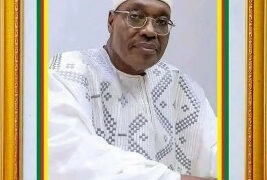
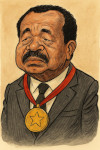



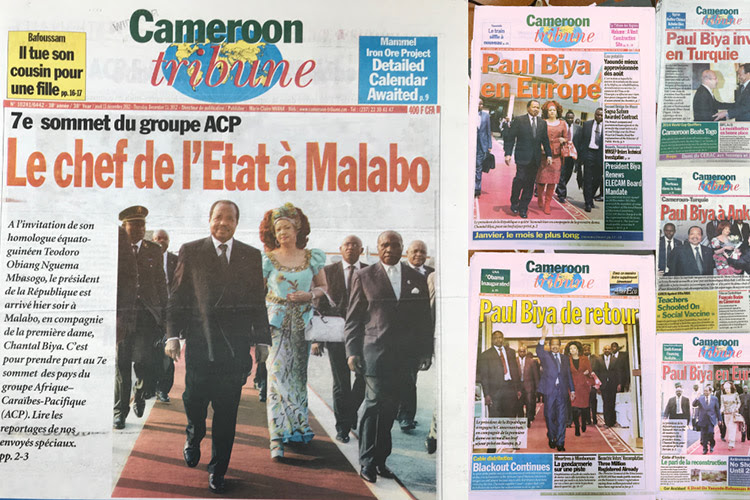
Cameroon’s president, Paul Biya, likes to travel abroad.
As a result, he’s missed some far-reaching events in the country he rules from afar.
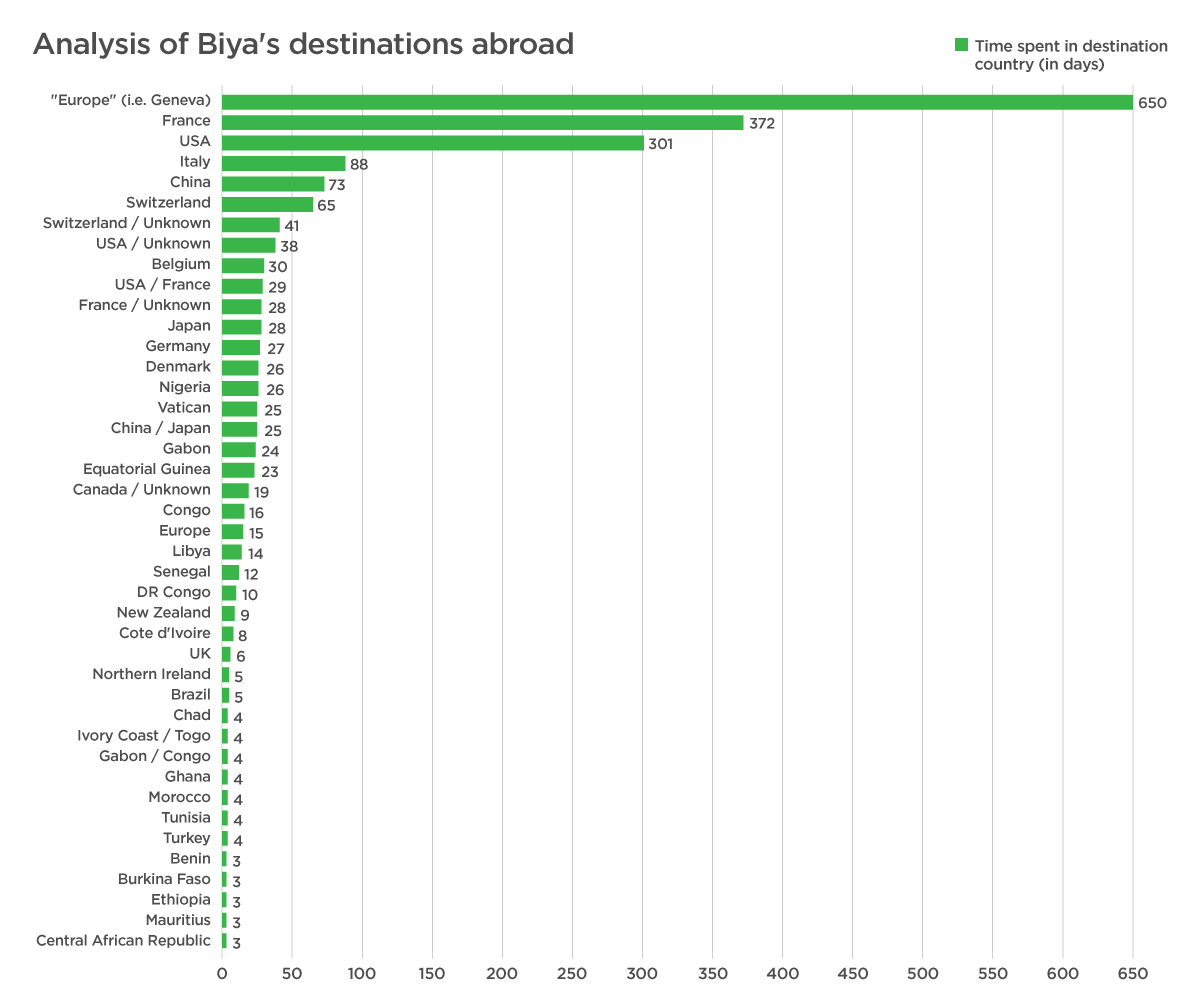
In October 2016, when an overloaded train derailed in the small town of Eseka, killing over 75 people, Biya was on a “brief private visit to Europe” which is how his office refers to his regular jaunts to Geneva. The president only returned from Switzerland two days after the catastrophe, finally voicing his condolences on the airport tarmac.
A year later, Biya was away on another “private” visit to Switzerland when protests broke out in western Cameroon over marginalization of the English-speaking minority population. He didn’t return for another three weeks. While he was away, his security forces violently repressed demonstrators, setting off what has since become a simmering guerilla war.
The 85-year-old Biya has led his West African nation since 1982, winning four elections by sometimes improbably huge margins (while being accused by the opposition and observers of massive fraud).
His country’s citizens have become increasingly frustrated with his repeated absences.
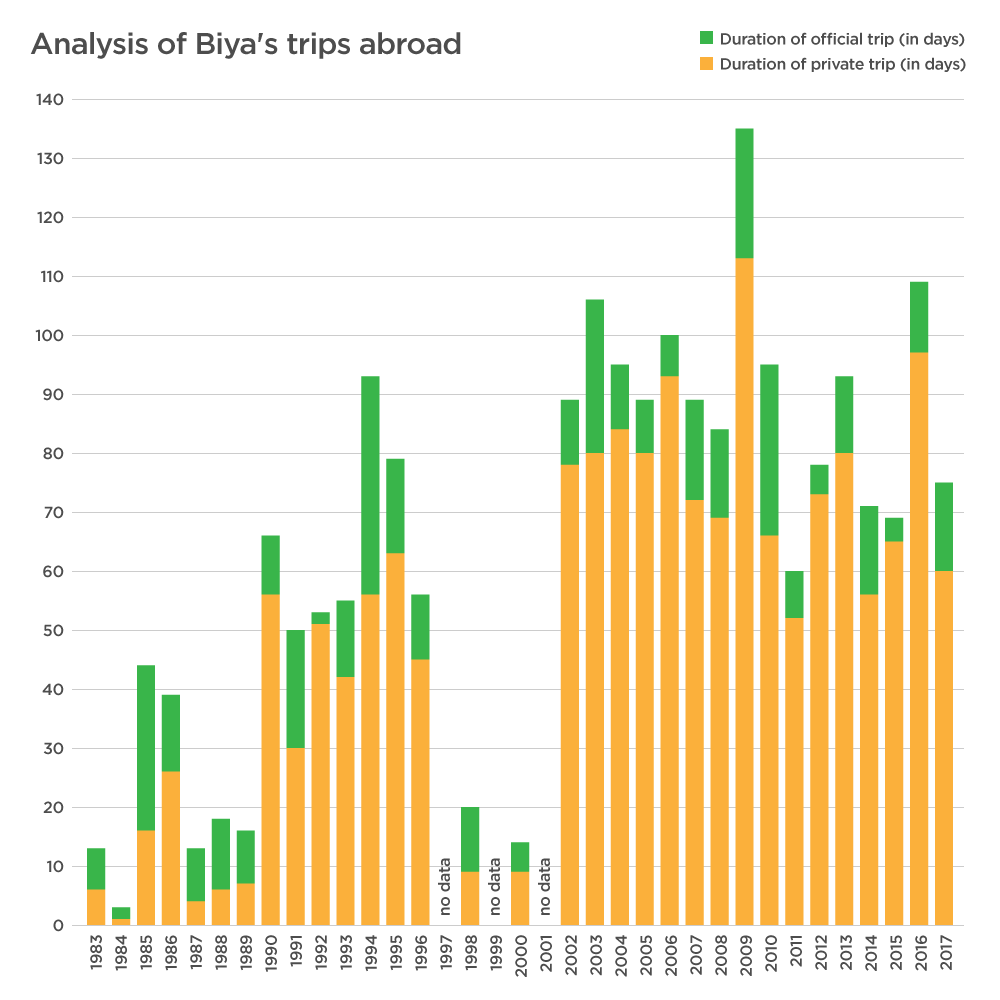
An investigation supported by the Organized Crime and Corruption Reporting Project (OCCRP) gathered information about the president’s travels from 35 years of editions of the daily government paper, the Cameroon Tribune. They show that, over that time, Biya has spent at least four-and-a-half years on his “brief private visits.” This total excludes official trips, which add up to an additional year. In some years, like 2006 and 2009, Biya has spent a third of the year out of the country.
These calculations are conservative because some editions of the Tribune are hard to find, and archives in Cameroon, France, and the United States have gaps in their collections that span several years.
The president is not in
Cameroon is a low income country: A quarter of its 23 million citizens earn less than US$ 2 a day farming or hustling small jobs. The average life expectancy is under 60. In hopes of a better life, many of the country’s youths set off for Europe illegally in precarious vessels. Some are among the over 3,000 migrants who drowned in the Mediterranean in 2017.
Like them, the president seems to prefer a life in Europe. But the similarities stop there.
Biya’s official salary is modest (reportedly just $271 per month, plus bonuses), but he travels and lives abroad in luxury — thanks, at least in part, to his country’s taxpayers. According to Cameroonian political scientist Achille Mbembe, nobody really knows what he does on his frequent trips to Geneva, although speculation ranges from hospital treatments to shopping sprees.
While his palace in Yaoundé is rumored to be luxurious, Biya prefers to spend a large portion of his “private trips” at the five-star Intercontinental Hotel in Geneva, which offers a swimming pool and striking views of Lake Geneva and Mont Blanc.
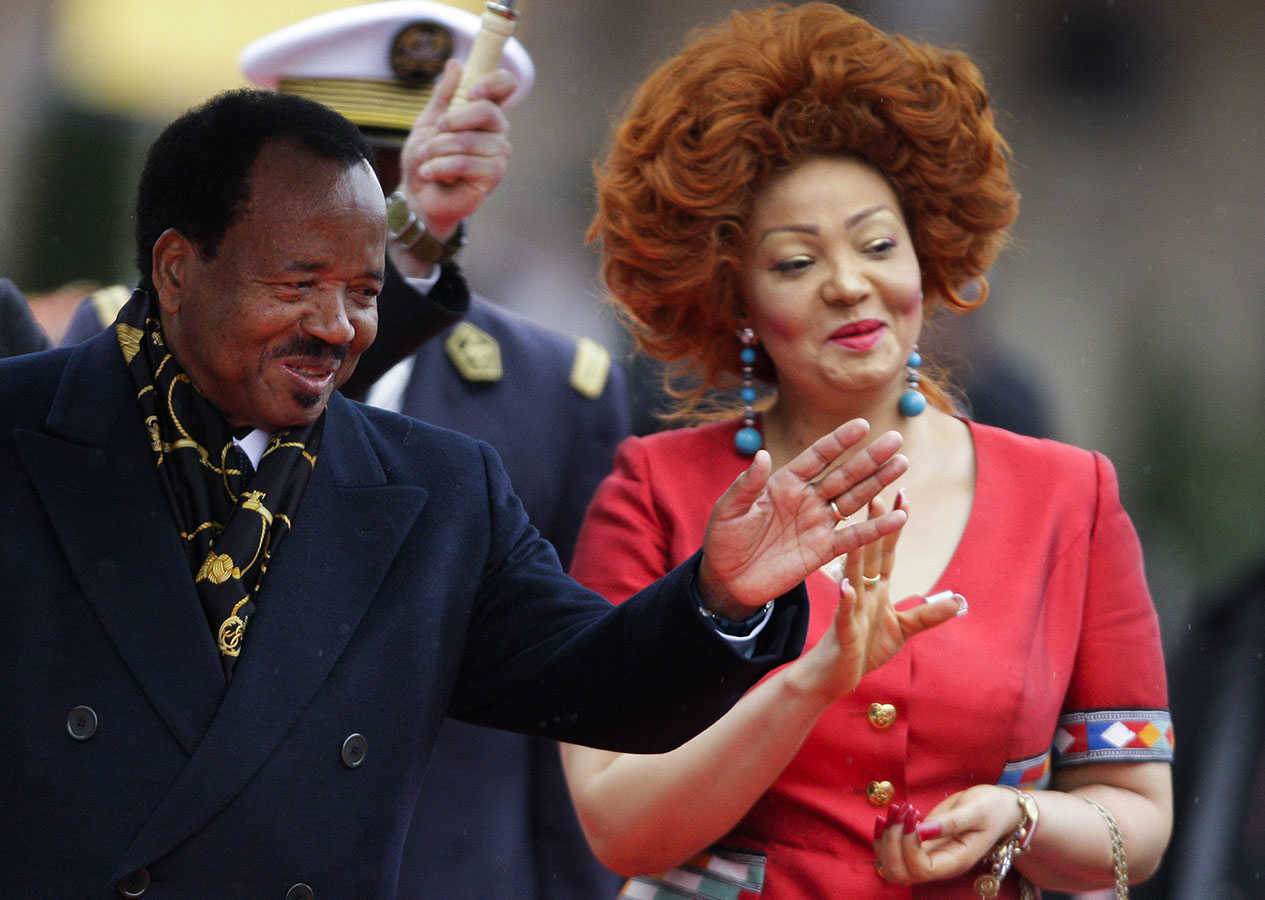
One of Biya’s closest confidants, Joseph Fouda, a military officer and special advisor, has accompanied him on at least 86 trips, amounting to more than three years of travel since 1993. He prefers a room on a top floor of the Intercontinental. Another close confidant, Martin Belinga Eboutou, 78, has spent nearly three years travelling with the president starting in 1987, when he was Cameroon’s ambassador to Morocco. Eboutou soon became a fixture on Biya’s journeys as his chief of protocol, and later as director of the president’s Civil Cabinet.
According to reporters’ conservative calculations — based on publically available hotel room prices and a compilation of entourage lists — the total hotel bill of Biya and his colleagues for one stay at Intercontinental, adds up to around $40,000 per day. At that rate, the cost of all of the president’s private trips (1,645 days in total) would add up to about $65 million since he came to power — and that’s not counting food, entertainment, and the rental of a private plane. The president’s office did not comment on this issue.
The president attempted to buy a brand new private jet in 2004, but his staff reportedly cut corners on the deal, buying a defective plane covered by a fresh coat of paint that nearly crashed on its first flight. Since then, the president has chartered at least several private aircraft, including a luxury jet formerly owned by the government of Kazakhstan. Used for regular journeys, such a plane would be large enough to carry some 300 passengers, but for an elite clientele it has been fitted with amenities such as full-size beds and an office, and seats about 60 people.
Travel by chartered plane isn’t cheap. Invoices from 2010 apparently sent by a company called CS Aviation to Director of the President’s Biya Civil Cabinet, and reviewed by OCCRP, bill the Civil Cabinet nearly $855,000 for one round trip for 50 passengers from Yaoundé to Geneva and back. Other invoices show that, in 2013, the plane was kept on standby for two weeks at a daily cost of nearly $157,000. The company did not reply to reporters’ requests for comment.
It is not clear how much of the president’s travel money comes from the part of the national budget allocated to his office, which totaled $104 million in 2018.
According to the International Monetary Fund, more than $300 million of the revenue of Cameroon’s national oil company in 2017 was not accounted for. The president has oversight over the company, whose oil sales, according to a leaked US diplomatic cable published by WikiLeaks, have historically been used as a slush fund.
According to Transparency International, Cameroon is one of the world’s most corrupt countries, ranking 145th out of 176 countries on its Corruption Perception Index.
Who pays, who plays
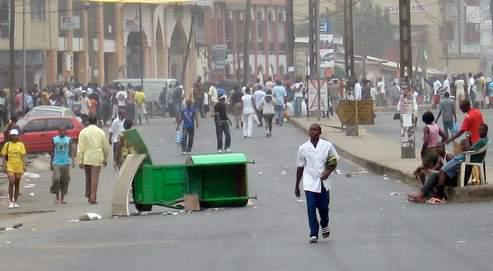
Cameroonians pay in other ways for the president’s jaunts abroad. Every time he returns to Yaoundé, his motorcade crosses the whole capital from Nsimalen International Airport to his home, the Unity Palace. A dozen gleaming cars, including an ambulance, whizz through the streets. To ensure a smooth journey, traffic is blocked on the main roads, at times for the whole day.
Snipers are positioned on top of buildings. Taciturn soldiers in green camouflage stand at every corner with assault rifles slung over their bulletproof vests. Cars, motorbikes and pedestrians are forbidden from crossing, and so huge traffic jams pile up against both sides of blocked avenues. The city’s yellow taxis must spend the day parked, earning no revenue.
Urban legends circulate about these grand displays, like the one about a bride and groom who ended up stuck, separated by the president’s motorcade, on opposite sides of an avenue. When the president passes, the city stops breathing.
President Biya’s party, the Cameroon People’s Democratic Movement, arranges for crowds to line the closed streets and cheer for the president. But Florian Ngimbis, a Cameroonian blogger, says that Biya’s trips are seen not just as lavish outlays, “but very much also as a kind of contempt for the Cameroonian people.”
Those few Cameroonians who have the most reason to cheer Biya’s return are the dancers and musicians paid to perform on the tarmac when his plane lands. One drummer, afraid to have his name appear in this article, remembers earning $60 a few years ago: “We didn’t complain… we could drink beers for three days.” Nonetheless, says the drummer, security concerns have trumped the thirst for pomp and ceremony lately, and fewer musicians are being invited.
Decrees upon departure
When Biya lands in Yaoundé, he also meets his government — at the airport. Formal ministerial councils are organized infrequently, every year or two at the most. But while Biya has used public funds to sustain a bureaucracy of 65 ministers and state secretaries, he mostly governs by decree or through a handful of laws sped through a rubber-stamp parliament.
Biya signs a flurry of acts between each of his trips. For example, in 2017, he signed a dozen laws — the entire legal output for that year – in a couple of days. It took him just three days to sign the entire year’s decrees.
According to Mbembe, the Cameroonian political scientist, Biya’s decrees mostly nominate civil servants to certain positions rather than directing any substantial course in policy.
“His way of exercising power is to not decide,” Mbembe said in a phone interview, “nobody knows what Biya thinks, or what he’ll do… everything can be changed from one day to the next”. He has become a “ghostly figure” leaving civil servants without direction. According to Mbembe, the unpredictability allows Biya to instil a fear of retribution in his ruling apparatus, as well as hopes of nominations to positions rendered lucrative by corruption.
It’s a system that has kept everyone in check for 35 years — including those with ambition to take over power. But it could lead to a chaotic vacuum when the 85-year old president passes – whether he’s in his West African homeland or in a luxury hotel room far overseas.
With reporting from: Christian Locka (Cameroon), Félix Cyriaque Ebolé Bola (Cameroon), Marie Maurisse (Switzerland), Vlad Lavrov (Kazakhstan)
This story is part of the Global Anti-Corruption Consortium, a partnership between OCCRP and Transparency International. For more information, click here.